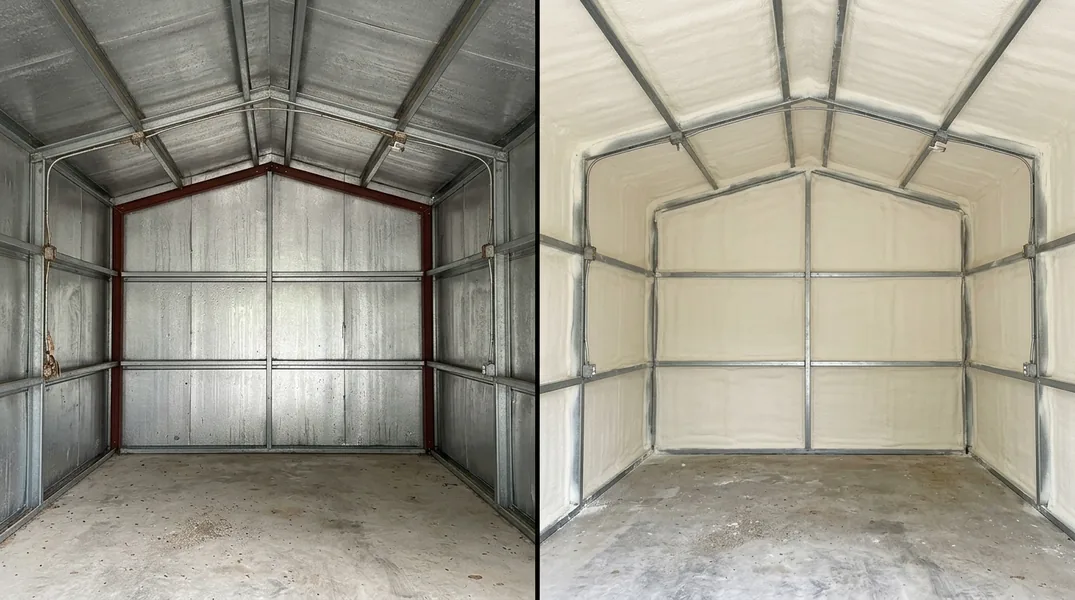
Why Mid-Century Ranches in Hephzibah Need Attic Insulation Upgrades
Mid-century ranch homes built in the 1950s and 1960s around Hephzibah have a lot of charm, but their insulation often does not. Many of these properties, particularly those near Highland Park and Bellemead, were constructed with minimal attic insulation or materials that have degraded significantly over the decades. Homeowners in these neighborhoods frequently discover that their energy bills spike during summer and winter, and their homes struggle to maintain comfortable temperatures year-round.
The problem is straightforward: older insulation settles, compacts, and loses its R-value over time. Fiberglass batts and blown-in cellulose that worked adequately in 1965 are now far less effective. If you own a mid-century ranch in Hephzibah, upgrading your attic insulation is one of the most cost-effective improvements you can make. Not only will it lower your heating and cooling costs, but it also improves comfort, reduces noise transmission, and can even help prevent moisture and pest problems that plague older homes.
Spray Foam vs. Blown-In Insulation: Which Is Best for Your Attic?
When homeowners research the best insulation for attic applications, they quickly encounter two leading options: spray foam and blown-in insulation. Both have legitimate uses, but they perform very differently, especially in the context of older ranch homes with irregular framing and existing gaps.
Blown-in insulation, typically made from cellulose, fiberglass, or mineral wool, is installed by blowing loose material into the attic cavity. It's relatively fast and inexpensive upfront. However, blown-in insulation has several notable limitations. It settles over time, losing effectiveness. It cannot seal air leaks or gaps in framing, meaning conditioned air still escapes through cracks around ductwork, wiring, and structural irregularities. In humid climates like Georgia, blown-in cellulose can absorb moisture and become compressed, further reducing its insulating value. Additionally, once installed, blown-in insulation is difficult to inspect or repair without removing large sections.
Attic Spray Foam Insulation works differently. It is sprayed as a liquid that expands and hardens, conforming perfectly to every cavity, corner, and irregular space in your attic. Spray foam adheres to framing, creating an air-tight seal that stops thermal transfer and air infiltration simultaneously. It does not settle, maintains its R-value indefinitely, resists moisture, and can even provide structural reinforcement to roof trusses. The tradeoff is higher upfront cost, but the energy savings and durability typically justify the investment over a 20 to 30 year lifespan.
Spray Foam vs. Fiberglass: Why Modern Homes Choose Spray Foam
Fiberglass batts and rolls have been the standard attic insulation in American homes for decades. They are affordable, familiar, and easy to install. However, when comparing spray foam vs fiberglass in the context of mid-century ranches, the differences become clear. Fiberglass batts require precise installation to be effective, and they perform poorly when framing is not uniform or when gaps exist around obstacles. In older homes with settled foundations, uneven rafters, or complex roof geometries, fiberglass batts leave voids and air pockets that compromise performance.
Fiberglass also absorbs moisture readily, which is a serious concern in humid Georgia climates. Once wet, fiberglass loses its insulating properties and can harbor mold growth. It also provides no air-sealing benefit; you still need separate vapor barriers and caulking to address air leaks. Spray foam, by contrast, creates a continuous thermal and air barrier in a single application. It handles moisture far better, especially Closed Cell Spray Foam Insulation, which has a vapor barrier built in. For homeowners in Highland Park and Bellemead looking to truly upgrade their attic performance, spray foam delivers superior results compared to traditional fiberglass.
Spray Foam vs. Cellulose: Durability and Performance Comparison
Cellulose is an eco-friendly blown-in insulation made from recycled paper. It appeals to environmentally conscious homeowners and often costs less than spray foam. However, spray foam vs cellulose reveals important performance trade-offs. Cellulose settles approximately 20 percent over the first year and continues to compact slowly thereafter. This means the R-value you achieve on installation day decreases over time. Cellulose is also highly hygroscopic, meaning it readily absorbs moisture from humid air. In attics with poor ventilation or in homes prone to condensation, cellulose can become waterlogged, leading to mold and structural decay.
Cellulose also requires careful installation to avoid voids and bridging, where the material fails to fill gaps properly. It provides no air-sealing capability on its own, so additional air-sealing work is necessary to address leaks around ductwork, electrical penetrations, and framing irregularities. Open Cell Spray Foam Insulation and closed-cell options eliminate these concerns. They do not settle, provide inherent air-sealing, resist moisture better, and maintain their R-value indefinitely. While spray foam costs more initially, the long-term performance and minimal maintenance make it the superior choice for homeowners seeking lasting results in the Hephzibah area.
Understanding R-Value and Thermal Performance in Attic Insulation
R-value measures insulation's resistance to heat flow. Higher R-values indicate better insulating performance. For attics in Georgia, the U.S. Department of Energy recommends R-38 to R-60 depending on your specific climate zone and heating/cooling system. However, R-value alone does not tell the whole story. Two insulation materials with identical R-values can perform very differently if one has air leaks that bypass the insulation entirely.
Blown-in insulation and fiberglass batts provide R-value in the material itself, but they do not address air leakage. Studies show that homes with gaps and cracks in attic insulation can lose 20 to 30 percent of their heating and cooling energy to infiltration and exfiltration. Spray foam provides both R-value and air-sealing in one application. This means you achieve better overall thermal performance with less material thickness. For example, closed-cell spray foam typically achieves R-6 per inch, while open-cell achieves R-3.5 to R-3.8 per inch. When installed properly, even open-cell spray foam outperforms blown-in cellulose or fiberglass batts because it eliminates air leakage pathways that these materials cannot address.
Attic Spray Foam Insulation Cost in Hephzibah: What to Budget
Cost is a legitimate consideration when planning an attic insulation upgrade. The pricing for spray foam typically ranges from 1.50 to 2.50 dollars per board foot, depending on the type (open-cell or closed-cell), the complexity of your attic, and local market conditions. For a typical 1,500 square foot attic insulated to R-38 with open-cell foam, you might budget 3,000 to 5,000 dollars. Closed-cell foam costs more but offers superior moisture resistance and a higher R-value per inch, making it ideal for humid climates and attics prone to condensation.
Blown-in insulation costs considerably less upfront, typically 0.50 to 1.00 dollar per square foot, which can seem attractive. However, when you factor in the need for separate air-sealing work, the shorter effective lifespan due to settling, and higher energy bills over 20 years, the total cost of ownership often favors spray foam. Many homeowners in Highland Park and Bellemead find that the energy savings from spray foam offset the higher initial investment within 5 to 10 years. To understand your specific situation and get an accurate estimate, contact Augusta Spray Foam Insulation at (706) 739-5929 for a free estimate. We will evaluate your attic, discuss your goals, and provide transparent pricing tailored to your home.
When to Call a Professional: Attic Spray Foam Insulation Near Me
Attic insulation installation is not a typical DIY project. Spray foam application requires specialized equipment, proper safety protocols, and technical expertise to achieve uniform coverage and avoid overspray that damages framing or creates fire hazards. Professional installers are trained to identify and seal air leaks, work around existing ductwork and electrical systems, and ensure the foam cures properly. A poorly installed spray foam job can be worse than no upgrade at all, leading to inadequate coverage, moisture problems, or off-gassing issues.
If you live in Hephzibah or the surrounding areas near Highland Park and Bellemead, Augusta Spray Foam Insulation has the experience and equipment to handle your attic project professionally. We specialize in spray foam applications for older homes and understand the unique challenges of mid-century ranch construction. Our team will assess your current insulation, identify air leaks and problem areas, and recommend the best solution for your budget and goals. Whether you choose open-cell or closed-cell foam, we ensure the job is done right the first time. Call us today at (706) 739-5929 or visit our website to schedule your free estimate.
Looking for a professional spray foam insulation contractor in Hephzibah? Augusta Spray Foam Insulation responds fast for all your spray foam insulation needs.
Get a Free Quote