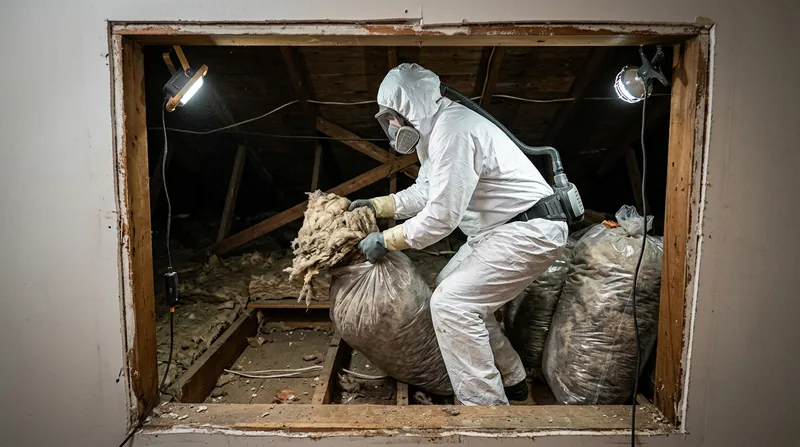




Hephzibah's mid-century brick ranches and frame cottages across Richmond County often carry decades of fiberglass batts in their attics and crawl spaces. In this climate zone 3A heat and humidity, old insulation sags, absorbs moisture from summer air, and loses its R-value long before it reaches the end of its design life. Insulation removal in Hephzibah clears out that failed material so new spray foam can be installed correctly, restoring thermal control and stopping the moisture cycle that drives cooling bills higher every year. We remove old insulation from attics, crawl spaces, and rim joists across Hephzibah, Blythe, Grovetown, and the surrounding metro before spray foam goes in. The work is straightforward, the difference is immediate, and the cost is a fraction of what homeowners spend on energy waste while sitting on degraded insulation.
Why Insulation Removal Matters in Hephzibah's Hot, Humid Climate
Hephzibah's summer heat and persistent humidity attack insulation from both sides. Vented attics bake in the sun and pull damp air inward through every gap, while crawl spaces over red clay and sand stay perpetually moist and feed that moisture up through subfloors into living spaces. Fiberglass batts installed in the 1970s and 1980s absorb that moisture, compress under their own weight, and stop working. Leaving failed insulation in place while adding new foam on top traps the old material, locks in moisture, and creates a substrate that will never dry. The only way to restore control is to remove the old insulation, dry and seal the space properly, and install new foam with the right air sealing.
- Old fiberglass batts in Summerville and downtown Hephzibah cottages often sit on bare joists with ductwork exposed to ground moisture and summer heat.
- Mid-century ranches across Richmond County carry thin, settled batts that cannot match the humidity pressing inward during nine months of warm weather.
- Vented crawl spaces in rural Burke and Jefferson counties stay damp year-round, and stacking new insulation over wet, moldy material defeats the entire retrofit.
- Removing old insulation before foam installation is the only credible path to stopping the moisture cycle and controlling energy cost.
Removing failed insulation is the foundation of every retrofit that works. Without it, you are spending money on new foam over a substrate that will continue to fail.
Key info: Hephzibah homes built before 1995 almost always have vented attics and open crawl spaces. The insulation in those spaces has been absorbing humidity for 30 to 50 years. A removal and inspection often reveals moisture staining, settled batts, or rodent nesting that cannot be fixed by topping off with new material. Removing it first is not an extra cost; it is the cost of doing the job right.
For more detail on what happens when spray foam is applied over failed insulation, see our page on attic spray foam insulation in Hephzibah.
How We Handle Insulation Removal in Hephzibah
Removal is methodical, not rushed. We arrive with equipment to contain dust and debris, identify the type and extent of old insulation, disconnect any ductwork or electrical that sits in the material, and haul everything out in stages so the space stays manageable. Once the old material is gone, we inspect the substrate for moisture, mold, or damage. If the attic or crawl space is wet, we address that before any new foam goes in. If it is dry and ready, we prep the surfaces, seal air leaks, and begin spray foam installation. The removal step takes a day or two depending on the volume; the inspection and foam installation follow.
- We use negative air and dust containment to keep old fiberglass particles out of living spaces and HVAC systems during removal.
- All old insulation is bagged and hauled to a licensed facility; we do not dump it on site or leave it for the homeowner.
- We inspect joists, rim boards, and ductwork once the old material is gone, so any hidden damage or moisture is visible before we proceed.
- If a crawl space or attic shows standing water or active moisture, we stop and recommend a moisture remedy before foam is installed.
- Once the space is clean and dry, we air-seal rim joists, band joists, and rim vents before spray foam application begins.
Proper removal is the precondition of every retrofit. Cutting corners here guarantees failure later.
Example: A 1965 brick ranch in Hephzibah with a vented attic over 1,200 square feet typically carries 15 to 20 tons of settled fiberglass batts, some over ductwork, some moldy from roof leaks, some compressed to half their original thickness. Removal takes one full day, inspection and air sealing another half day, and spray foam installation a third day. Total time in the home is three days. Total cost for removal alone is in the $2,500 to $3,500 range, depending on access and debris volume. That cost is part of the full retrofit budget, not a separate line item.
For details on what happens after removal, see our page on insulation replacement and re-insulation.
Removal Methods and Approaches
| Approach | Description | Best for |
|---|---|---|
| Attic fiberglass removal with containment | Negative air unit, sealed work area, all batts bagged and hauled, ductwork cleaned or replaced if needed. | Vented attics in Summerville, downtown Hephzibah, and mid-century ranches with thin, settled insulation and no active roof leaks. |
| Crawl space insulation removal | Manual removal of batts and blankets from joists and rim boards, moisture inspection, debris hauled, space left clean and dry for air sealing and foam. | Vented crawl spaces in rural Burke and Jefferson counties with damp batts, rodent nesting, or mold growth on old insulation. |
| Spray foam removal (if previous retrofit failed) | Mechanical removal of failed or improperly applied foam, substrate cleaned, re-inspection, new foam installed with correct technique and ratio control. | Homes where prior spray foam work was done without mechanical ventilation, re-entry protocol, or proper thickness measurement. |
| Rim joist and band joist clearing | Old batts, loose fill, or failed foam removed from rim cavities, joists inspected, area air-sealed before new closed cell foam applied. | Ranch and cottage homes in Hephzibah and Grovetown where rim joists are exposed to crawl space moisture and have old, deteriorated insulation. |
Every removal is customized to the space, the material in place, and the condition of the substrate. We inspect first, then plan the removal and disposal method that leaves the space ready for new foam.
Insulation Removal Cost in Hephzibah: What to Expect
Removal pricing depends on the volume of old insulation, the accessibility of the space, and whether the material is contaminated or requires special handling. A typical attic removal in a mid-size Hephzibah home runs from $950 to $3,500. A crawl space removal adds another $800 to $2,500 depending on whether the space is accessible and how much material is present. The largest cost driver is volume: a 1,500-square-foot attic with R-19 batts takes longer to remove than a 900-square-foot bonus room with R-11. Access also matters: if the attic has a pull-down stair and clear floor space, removal is faster. If access is through a small hatch in a closet, the work takes longer and costs more.
Getting a written estimate on site is the only way to know the actual cost for your home. We measure the space, identify the insulation type and condition, and quote a firm price based on labor and haul-away. No surprises, no add-ons when the job starts. If you are planning a full retrofit with new spray foam, removal is part of the overall bid. If you are removing old insulation and deciding later whether to install new foam, we quote removal as a standalone service.
For a full breakdown of pricing across all our services, visit our pricing page.
What to Look for When Hiring an Insulation Removal Contractor Near Hephzibah
The insulation removal market in Hephzibah and the surrounding metro includes local shops, national franchises, and one-off crews with a trailer. The right contractor is one who has been in business in the area long enough to understand the local building stock, who carries full insurance, and who can show you exactly what the removal and inspection will cost before any work begins. Ask for references from homes in your neighborhood. Verify that the contractor has liability and workers' compensation insurance (not just a certificate of insurance, but actual active coverage). Get at least two estimates so you understand the range. And make sure the estimate includes the cost of hauling old material away; if it does not, ask where it goes.
- Request a written estimate that lists the square footage to be removed, the type of insulation, the disposal method, and the labor cost.
- Ask whether the contractor will inspect the space for moisture, mold, or damage once the old insulation is gone.
- Verify that the contractor carries liability insurance and workers' compensation coverage active at the time of the job.
- Check references from other Hephzibah or Grovetown homeowners who have had removal and foam installation done in the past two years.
- Clarify who is responsible for any ductwork cleaning, HVAC service calls, or permit applications that might arise during removal.
- Confirm that the contractor will not begin new foam installation until the space is dry and any moisture issues are resolved.
The best contractor is the one who takes the time to inspect and estimate correctly, and who walks away if the substrate is not ready. That discipline is what separates a job that lasts from one that fails in two years.
Ready to get started? Contact us for a free estimate at (706) 739-5929. We respond within 24 hours and can schedule an inspection at your convenience.
Insulation Removal in Hephzibah: Pricing Guide
| Service | Price | Details |
|---|---|---|
| Attic fiberglass removal | Starting at $950 | Includes containment, bagging, and haul-away for up to 1,000 square feet of settled batts and blankets |
| Crawl space insulation removal | Starting at $800 | Manual removal of batts from joists and rim boards, moisture inspection, debris hauled, space prepped for foam |
| Rim joist and band joist clearing | Starting at $600 | Old insulation removed from rim cavities, joists inspected, area cleaned and ready for new closed cell foam |
| Large attic or multi-zone removal | On estimate | Homes over 1,500 square feet or with multiple removal zones require on-site inspection to determine labor hours and haul cost |
| Travel and inspection | Included | No separate mileage fee or call-out charge in Hephzibah and surrounding service areas within Richmond and Columbia counties |
| Free written estimate | No charge | On-site inspection, detailed scope, firm pricing, no obligation to proceed with removal or foam installation |
Indicative pricing, the exact cost depends on square footage, finish, and site access. Free personalized estimate within 24h at (706) 739-5929.


